iCarsoft CR Eagle P Review: What the Extra $600 Over the Max P Buys
For $1,199.99 the 2026 CR Eagle P adds built-in TPMS programming with four sensors, a J2534 pass-thru, a videoscope and 14 OBDI adapters to the Max P's diagnostics. We check who in a repair shop gets that money back.
Spec sheet
- Our score
- 7.8/10
- Price
- $1,199.99
- Maker
- iCarsoft
- Category
- Pro Diagnostic Tablets
- Tested
- May 26, 2026
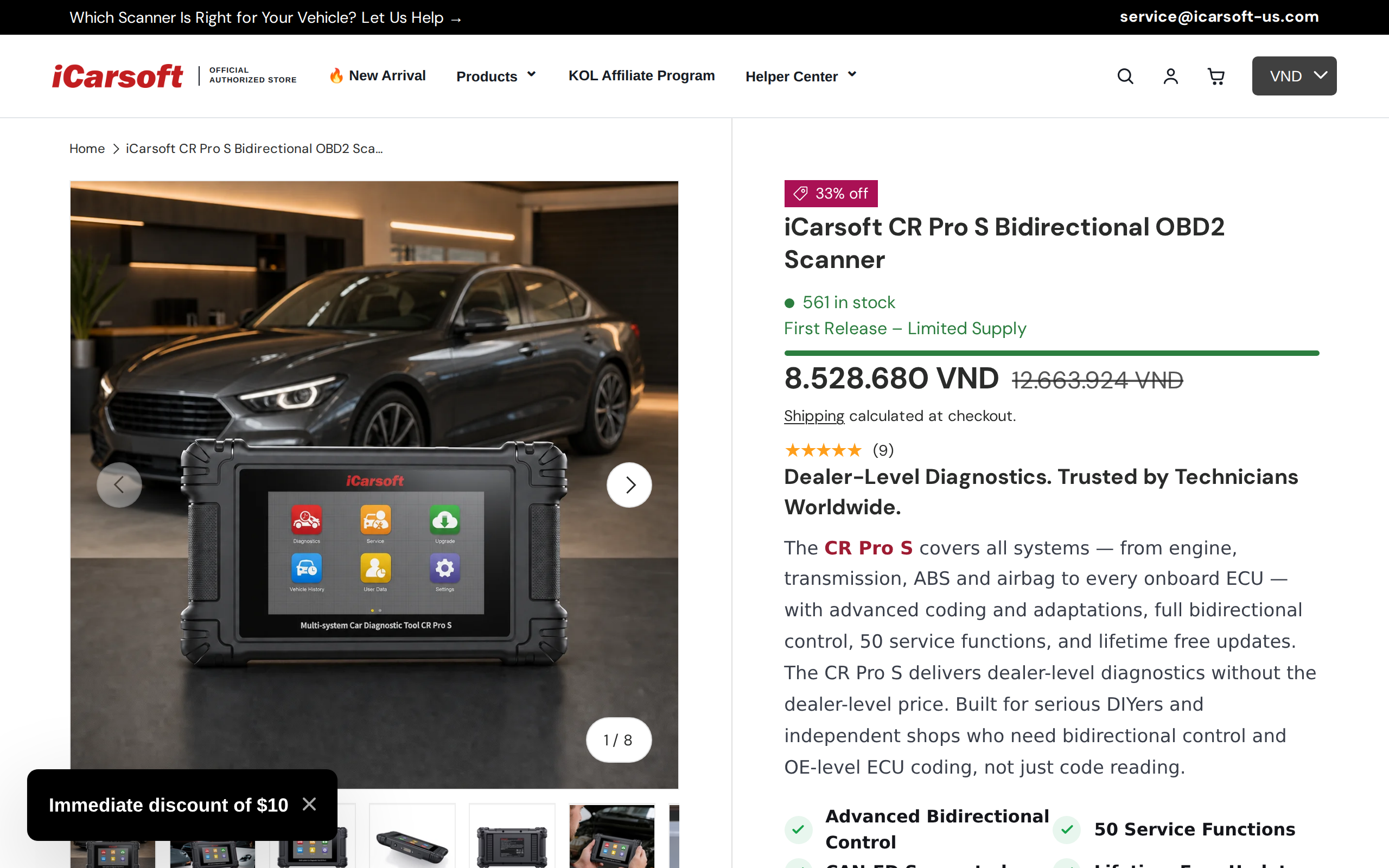
The CR Eagle P keeps the Max P's all-system diagnostics and adds a built-in TPMS module with four sensors, a J2534 pass-thru, a videoscope and 14 OBDI adapters. For an independent shop that does tires and OEM programming, that bundle is worth the extra $600. A home mechanic or diagnostics-only shop should buy the Max P. OEM software access is not included.
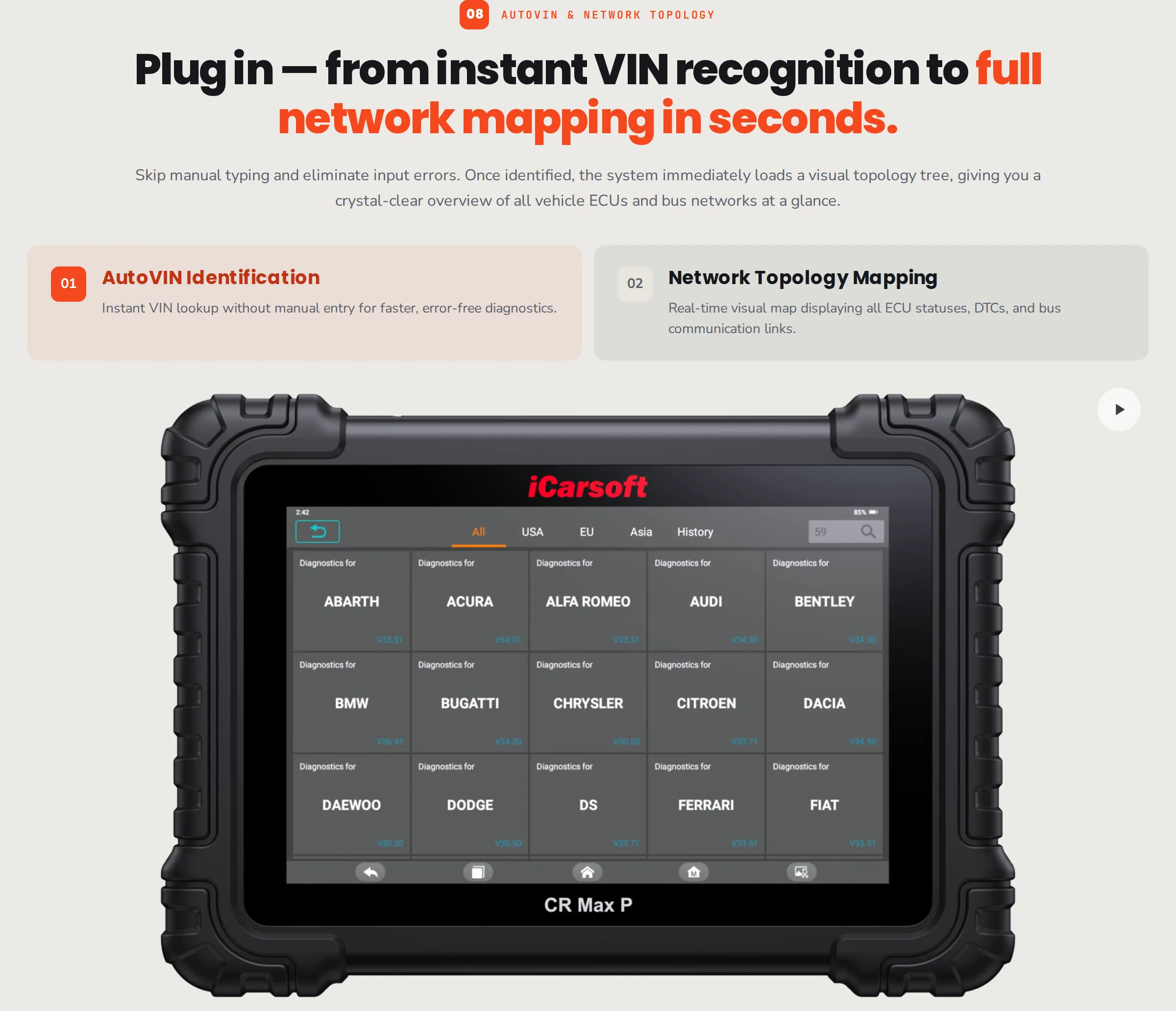
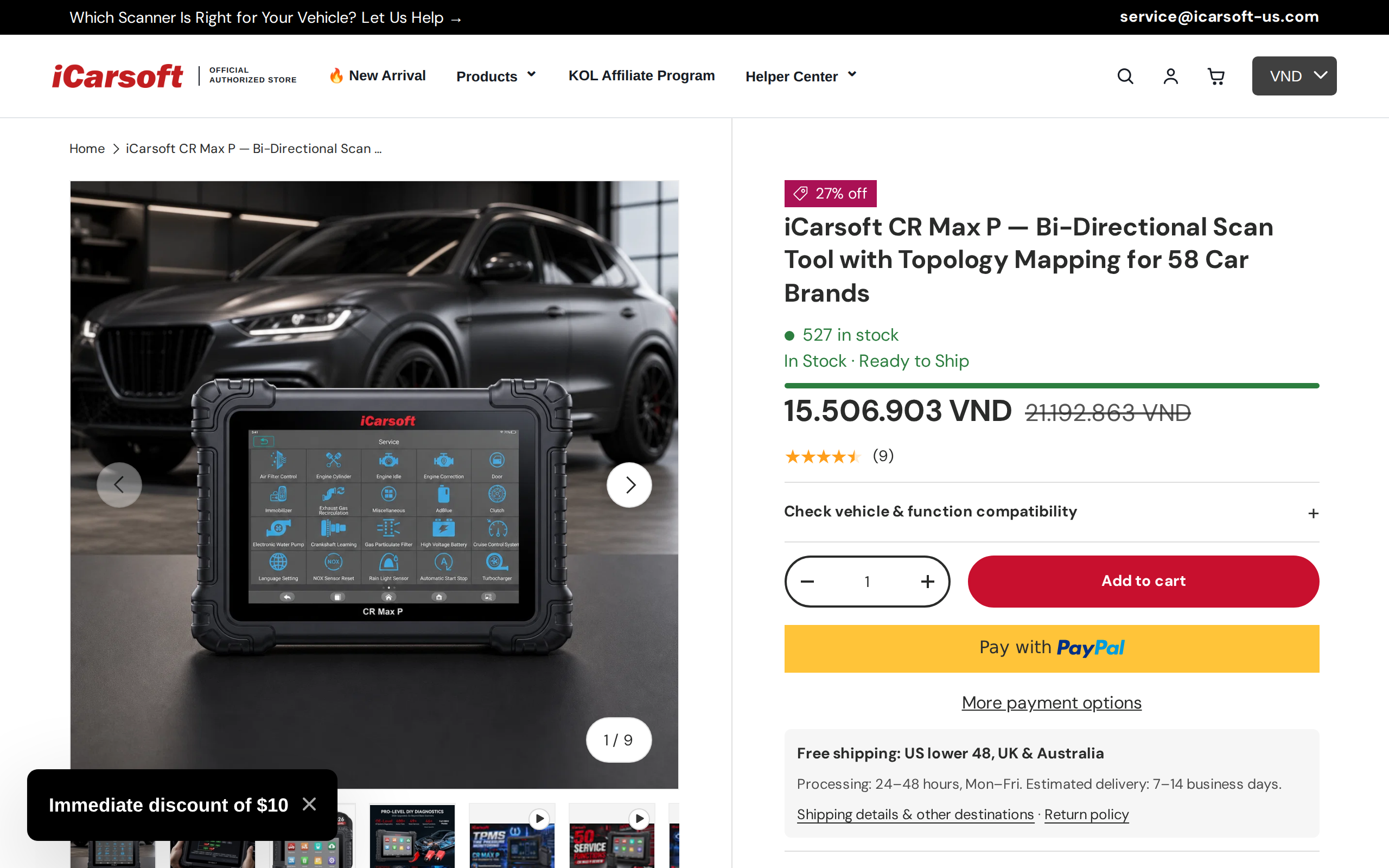
Best forIndependent shops that do tires, programming and older carsDouble the money for the same diagnostic brain sounds like a bad deal until you list what is in the box. iCarsoft says the CR Eagle P uses the same diagnostic engine as the CR Max P. What it adds is hardware and one protocol feature, at $1,199.99 against $599.99. For a shop the question is whether those additions replace tools you would otherwise buy separately.
This piece is built from iCarsoft's product page, FAQ and spec sheet, plus the maker's comparison tables. We found no independent bench test of the 2026 Eagle P, so every capability claim here is the maker's.
What the second $600 buys
The list is short and concrete:
- A built-in TPMS programming module and four iCarsoft sensors
- A J2534 pass-thru interface (J2534-1 and J2534-2)
- A videoscope and a battery test clip
- Fourteen older-car OBDI adapters
- 4 GB of RAM and 128 GB of storage, against 64 GB on the Max P
- A 2.0 GHz quad-core processor and dual-band Wi-Fi
Taken one at a time, only a few of these save a shop money. Together they turn a diagnostic tablet into a bay kit.
Tire sensors without a second tool
The page lists sensor wake-up, reading of universal and OEM sensors, programming of blank sensors to a vehicle's protocol, relearns and TPMS fault clearing. Four sensors ship in the case.
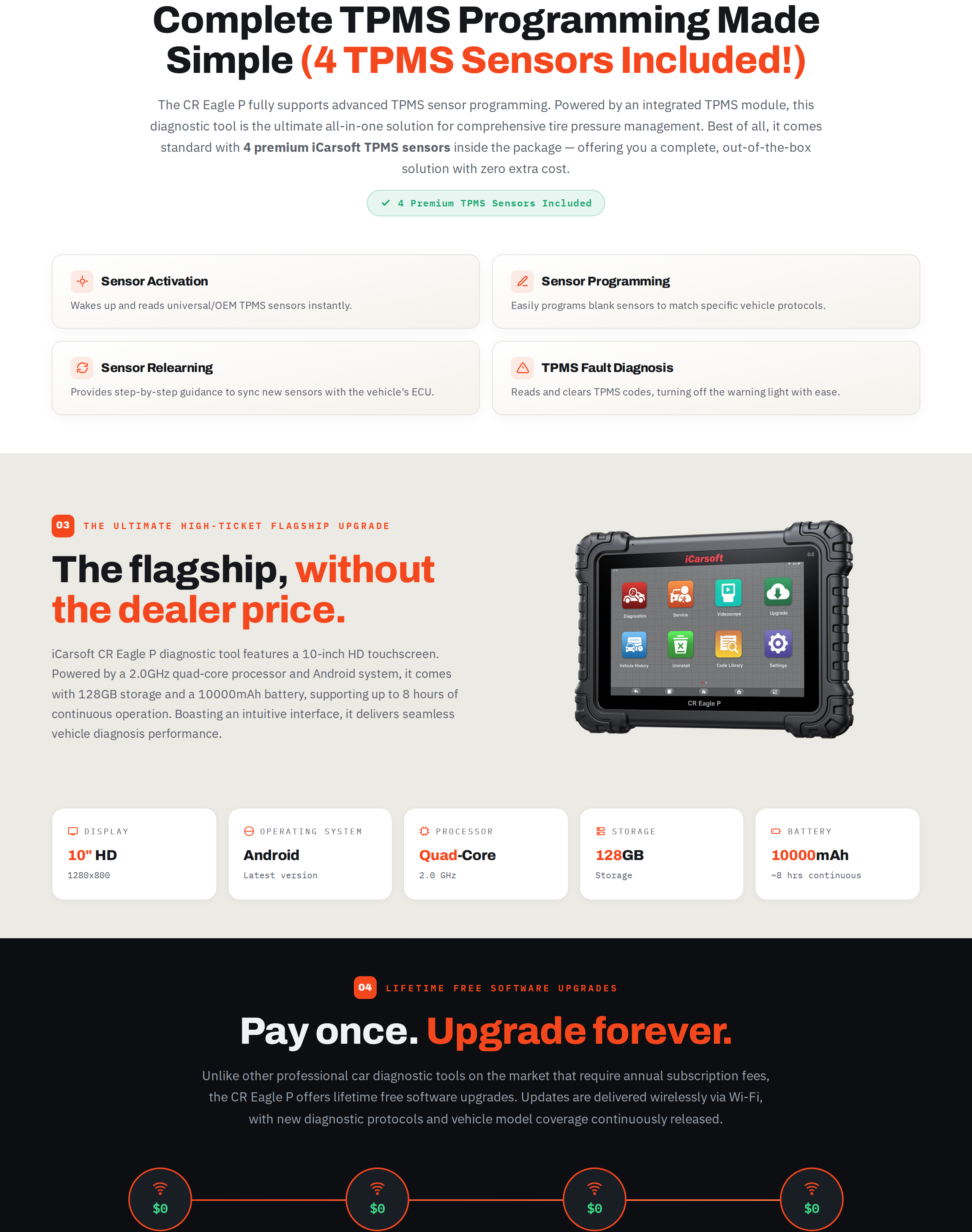
A tire-and-brake independent shop often buys a standalone TPMS tool for a few hundred dollars. If that is you, this module removes the purchase. If tires are not your business, you are paying for a feature you never open.
J2534: the item that changes the job
J2534 is the standard that lets a laptop reflash a module through a generic interface. iCarsoft says the Eagle P is a fully compliant J2534-1 and J2534-2 pass-thru device and names BMW ISTA, Mercedes XENTRY, Ford IDS and GM GDS2 as OEM programs it pairs with. The page does not describe the same feature on the Max P.
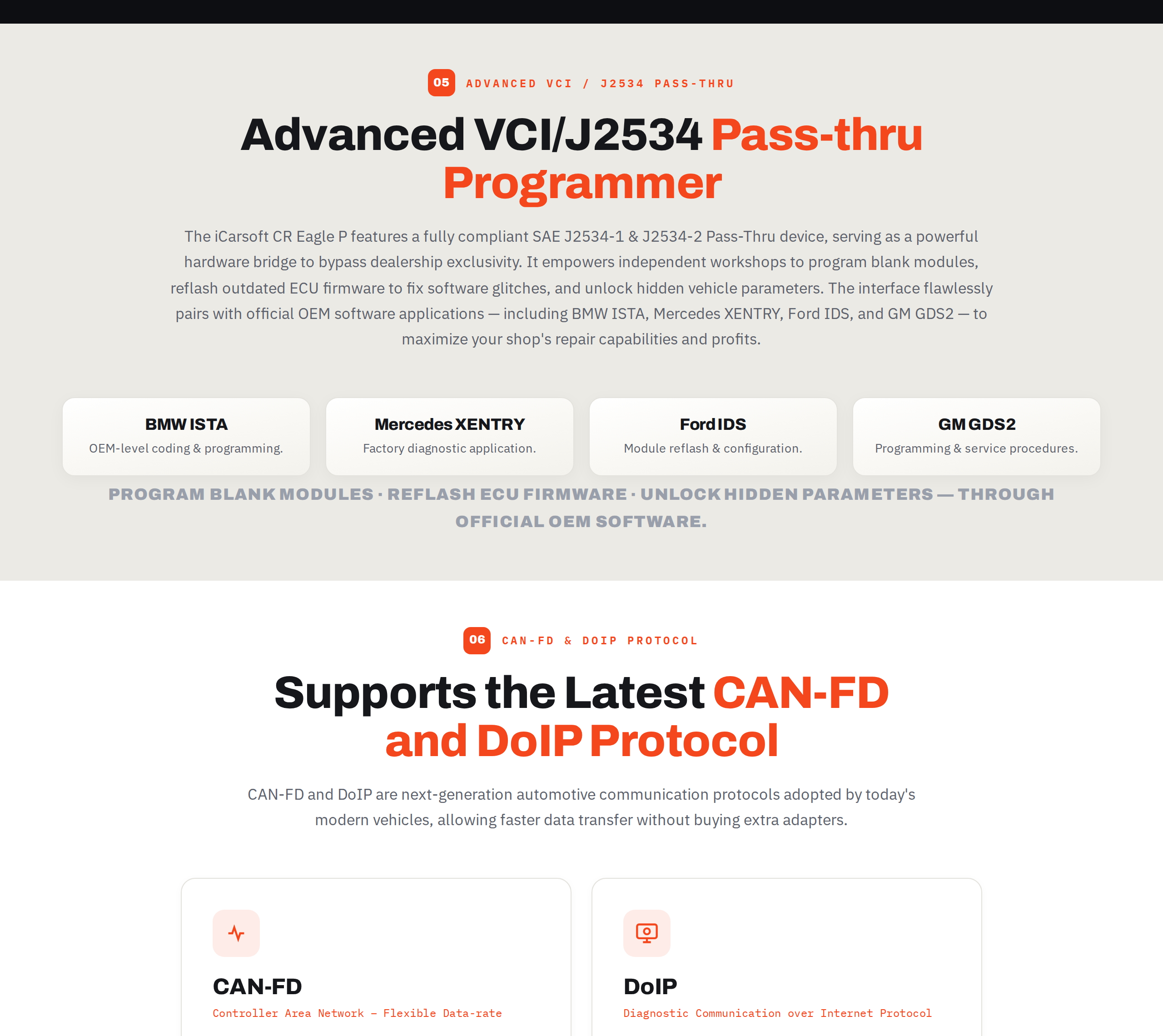
Here is the catch we would check before paying: the OEM programs and their access subscriptions are sold by the carmakers, and the page does not say any are included. The tablet is the bridge, not the toll. A shop that already pays for OEM access gets real value; one that does not should price that in first.
The accessories shelf
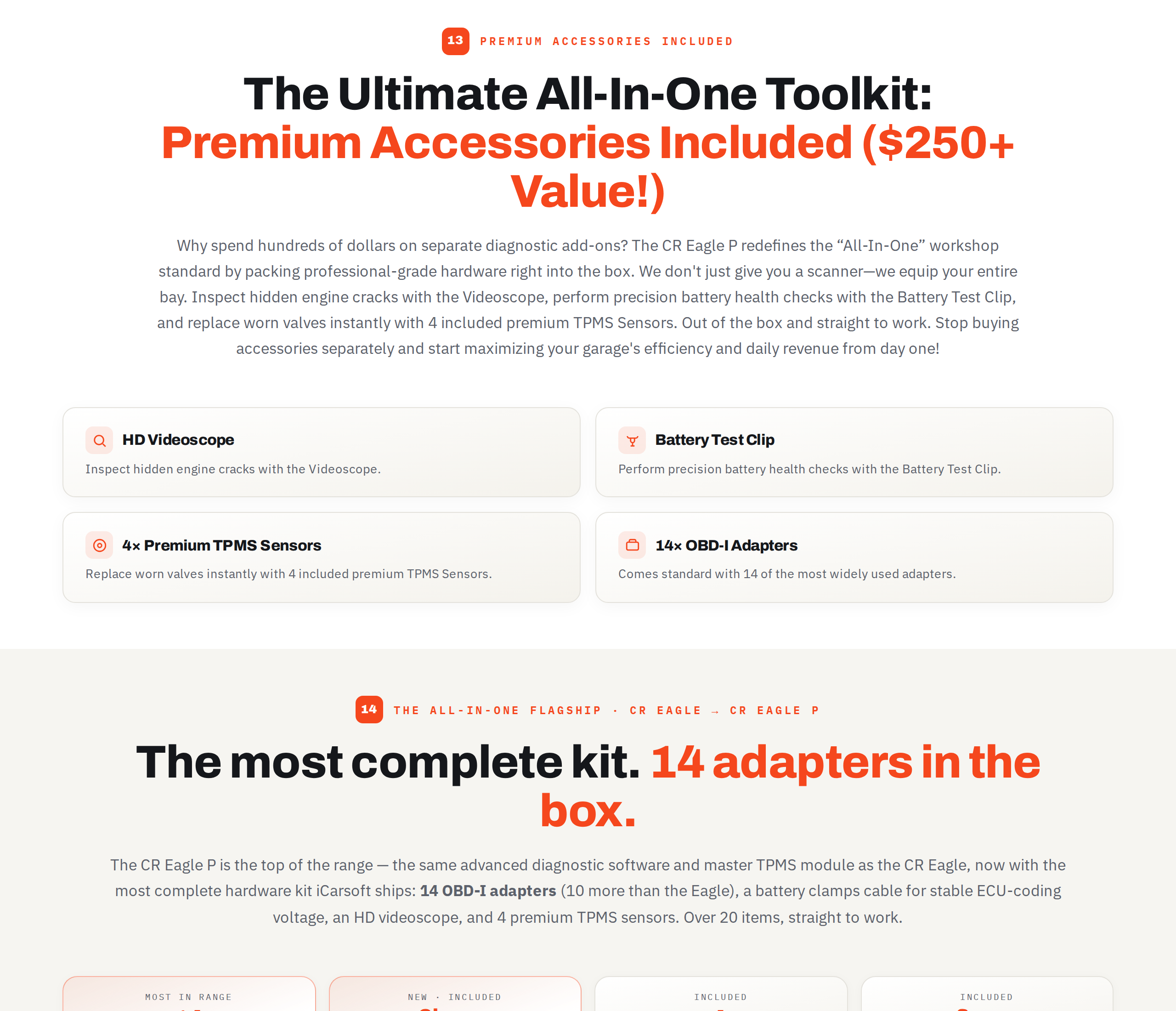
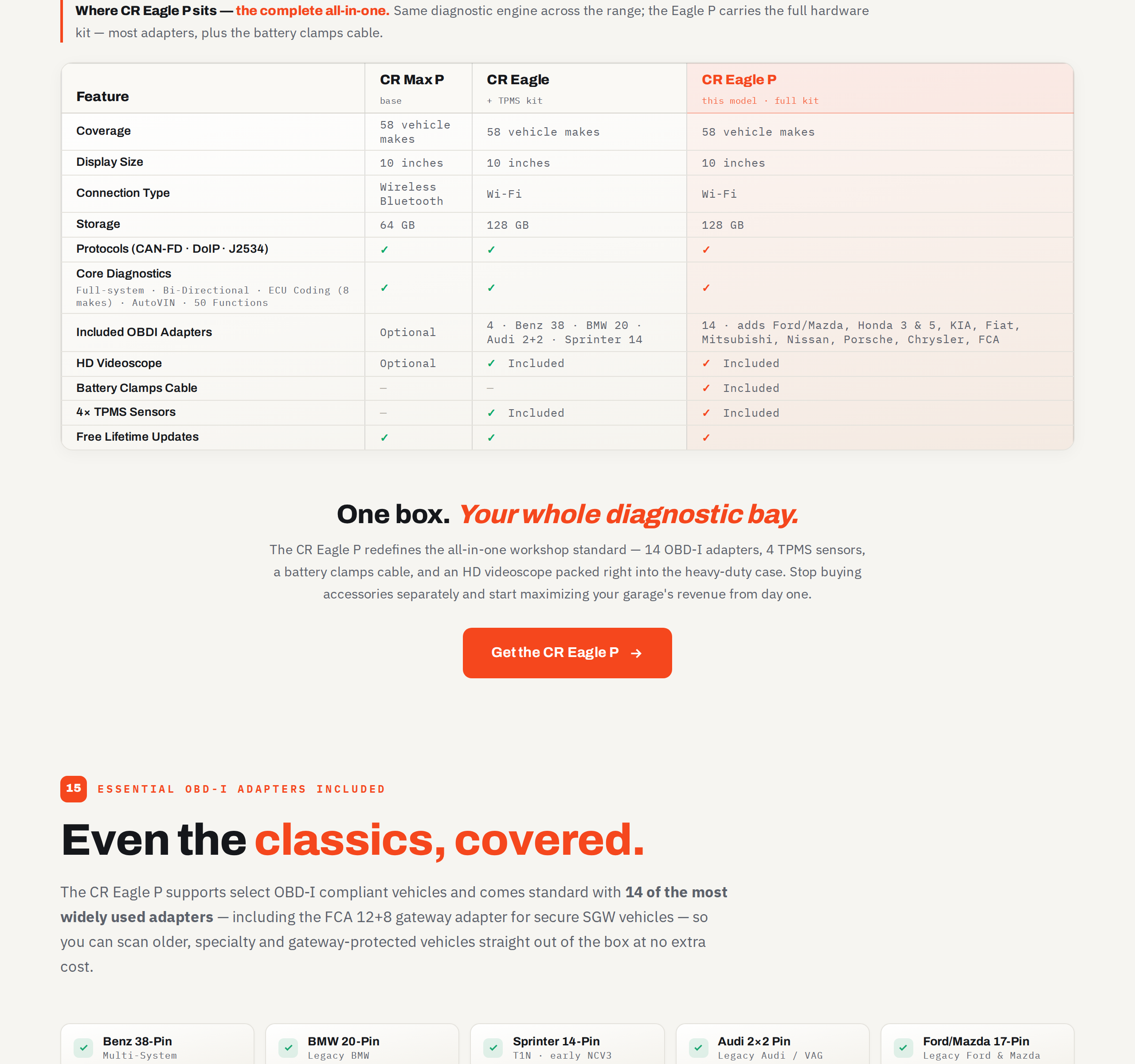
The Eagle P also bundles a videoscope, a battery test clip and 14 OBDI adapters. Those adapters matter for pre-OBD2 cars, which use odd connectors. The Max P ships with 4 such adapters for Benz, BMW, Audi and Sprinter in the comparison table; the Eagle P ships with 14, adding FCA, Honda, Fiat, Chrysler, Nissan, Mitsubishi, Ford/Mazda, Kia and Porsche.
Diagnostics and screen
The software side matches the Max P: all-system scans on 58 makes, bi-directional control, ECU coding, adaptations and 50 service functions (9 everyday and 41 advanced). The per-make counts start at 57 for oil reset and 48 for battery registration. It supports CAN-FD and DoIP, for 2024 and 2025 cars.
The tablet is a 10.1-inch, 1280 x 800 screen running Android 10, with a 10,000 mAh battery rated at roughly 5 hours. That is about three hours less than the Max P's stated rating, and likely the price of a faster processor.
A rough payback test
Do the sum with your own shop's numbers. Take the price of a stand-alone TPMS tool, the price of a J2534 interface if you would otherwise buy one, a videoscope and a set of adapter cables. If those add up to near $600, the Eagle P costs you nothing extra and gives you one case instead of four. If you would only ever buy one of them, the gap is just a premium you pay for convenience.
The FAQ also describes the CR Eagle as the lighter consumer and DIY version, and the Eagle P as positioned for workshop use. That framing is fair, and it is the best summary of who this is for.
Our verdict
The Eagle P is aimed at the independent repair shop that does tires, brakes and programming in the same week. For that buyer, a built-in TPMS tool, a J2534 interface and 14 adapters in one case are worth more than the $600 gap over the Max P. We would not recommend it to a home mechanic, who would pay for hardware that rarely leaves the case. A shop that never touches tires or OEM programming should buy the cheaper Max P and keep the money.
What worked, what did not
Pros
- Built-in TPMS programming with four sensors in the case
- J2534-1 and J2534-2 pass-thru for use with OEM software
- 14 OBDI adapters, against 4 with the CR Max P
- 4 GB RAM and 128 GB storage on a 10.1-inch screen
- CAN-FD and DoIP support for 2024 and 2025 cars
Cons
- $1,199.99 is double the CR Max P for the same diagnostic engine
- OEM programs such as ISTA and XENTRY are not included
- Rated battery life is about 5 hours, below the Max P
- No independent test of the 2026 model was found
Specifications
- Display
- 10.1-inch, 1280 x 800, Android 10
- Memory and storage
- 4 GB RAM, 128 GB
- Battery
- 10,000 mAh, about 5 hours
- Vehicle makes
- 58
- Service functions
- 50 (9 everyday, 41 advanced)
- TPMS
- Built-in module, 4 sensors included
- Pass-thru
- SAE J2534-1 and J2534-2
- In the case
- Videoscope, battery clip, 14 OBDI adapters